
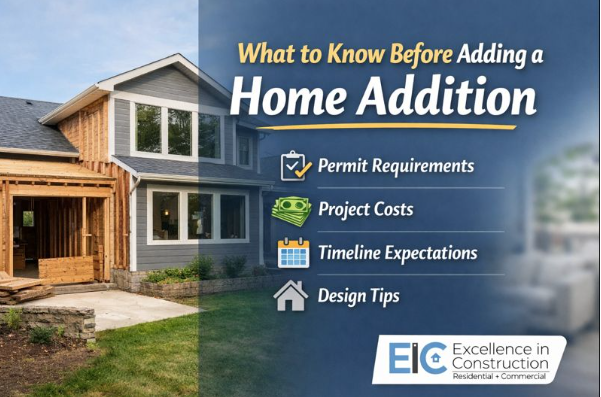
Adding a home addition is one of the best ways to gain extra space without moving. Whether you’re planning a new bedroom, expanding your kitchen, or adding a second living area, a well-planned home addition can significantly increase both comfort and property value.
However, home additions are more complex than standard remodels. Before you break ground, here are five essential things every homeowner should know to avoid delays, budget overruns, and design regrets—especially for homeowners in the Kansas City area.
1. Permits and Local Zoning Rules Matter More Than You Think
One of the biggest mistakes homeowners make is underestimating the importance of permits and zoning regulations.
Most home additions require:
- Building permits
- Zoning approval (setbacks, lot coverage, height limits)
- Electrical and plumbing permits
- Structural inspections
In many Kansas City neighborhoods, zoning laws determine how far you can build, how tall the addition can be, and how much of your lot can be used.
Working with an experienced contractor like Excellence in Construction ensures all permits are handled correctly and your addition meets local building codes—protecting you from fines, delays, and resale issues.
2. Understand the True Cost of a Home Addition
Home addition costs go beyond just square footage.
Your budget should account for:
- Design and architectural planning
- Foundation work
- Framing, roofing, and exterior finishes
- Electrical, plumbing, and HVAC extensions
- Interior finishes (flooring, drywall, paint)
- Permit fees and inspections
- A 10–15% contingency buffer for unexpected issues
Costs vary based on size, materials, and complexity, but professional planning helps you maximize value while staying within budget.
Pro Tip: Adding upward (second-story addition) often costs more than expanding outward due to structural reinforcement needs.
3. Timeline Expectations: Plan for Multiple Phases
A home addition is not a quick project—and that’s normal.
Typical phases include:
- Design and planning
- Permits and approvals
- Site preparation and foundation work
- Framing and roofing
- Mechanical systems (plumbing, electrical, HVAC)
- Inspections
- Interior finishes and final walkthrough
Depending on complexity, a home addition can take 2 to 4 months, sometimes longer if weather or permit approvals cause delays.
Setting realistic expectations upfront prevents frustration and helps your household prepare for construction.
4. Design for Both Function and Future Value
A successful home addition should feel like a natural extension of your existing home, not an afterthought.
Smart design considerations include:
- Matching rooflines and exterior materials
- Maintaining consistent ceiling heights
- Optimizing natural light placement
- Planning storage from the start
- Designing flexible spaces (guest room + office)
Think long-term: Will the addition still work for your family in 5–10 years? Will it appeal to future buyers?
Well-designed additions often deliver one of the highest returns on investment among remodeling projects.
5. Choose the Right Contractor for Your Home Addition
A home addition requires expertise in structural construction, not just interior remodeling.
Your contractor should:
- Specialize in home additions
- Understand local zoning and building codes
- Provide clear timelines and budgets
- Coordinate inspections and permits
- Communicate consistently throughout the project
Hiring a local contractor with experience in Kansas City homes ensures your addition is built safely, efficiently, and in compliance with all regulations.
Frequently Asked Questions (FAQ Schema-Ready)
Do I need permits for a home addition?
Yes. Most home additions require building, zoning, and trade permits.
How long does a home addition take?
Most projects take 8–16 weeks, depending on size, design, and permit approvals.
Is a home addition cheaper than moving?
In many cases, yes—especially when factoring in moving costs, taxes, and rising home prices.
Will a home addition increase my property value?
Yes. Properly designed additions often increase resale value and livable square footage.
Can I live in my home during construction?
Often yes, though some phases may cause temporary disruptions.
Final Thoughts
A home addition is a major investment—but when planned correctly, it can completely transform how you live in your home. Understanding permits, budgeting realistically, planning timelines, and working with an experienced contractor are key to success.
For homeowners in the Kansas City area, partnering with a trusted remodeling professional ensures your home addition is built safely, beautifully, and built to last.
